Start by Playing the Bill Timer
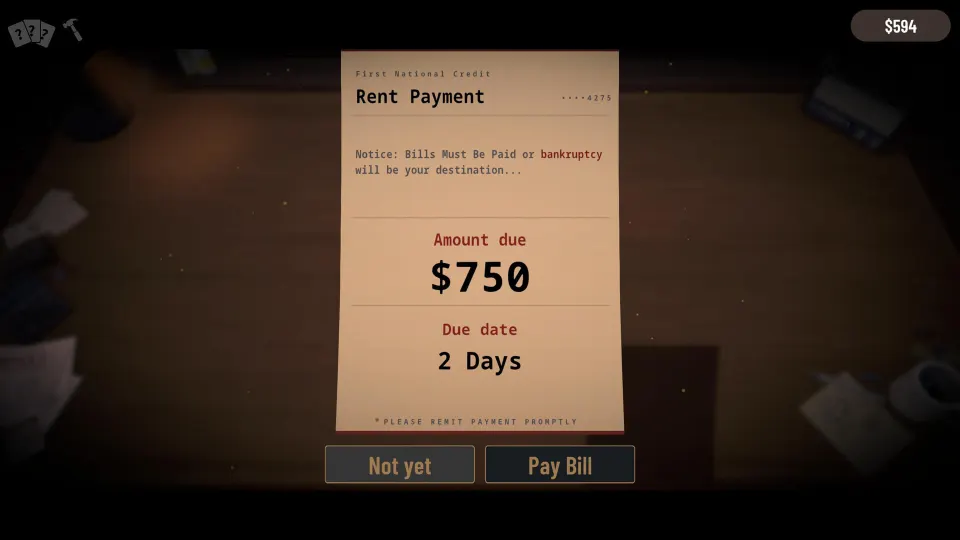
Bills Must Be Paid is won by protecting your next payment, not by spending every coin the moment you earn it. The bill deadline creates the real pressure in every cycle, while piggy banks are the tool you use to meet it. Learn this habit early and you will avoid the collector, keep your income intact, and make each reset more valuable.
Each run asks you to balance two needs: enough strength to destroy piggies efficiently and enough saved cash to cover the next bill. Buying upgrades without checking the deadline can turn a promising run into a recovery problem.
Use this simple loop every time you return to the desk:
- Check the upcoming bill, its cost, and remaining days.
- Smash reachable piggies and collect worthwhile drops.
- Identify what stopped the run: damage, stamina, empty spawns, or poor loot.
- Spend only on the upgrade that addresses that specific limit.
- Stop treating bill money as available once the deadline is close.
- Pay the bill, choose a perk, and reassess the desk.
| Situation on the desk | Likely problem | Best response |
|---|---|---|
| Piggies survive too many hits | Damage is too low | Buy base damage or a hammer better suited to tougher targets |
| Stamina ends with targets still available | Runs are ending too soon | Add stamina or reduce wasted swings |
| The desk becomes empty early | Not enough targets | Improve starting piggies or spawning |
| Targets cluster together | Area damage is underused | Consider hit radius or collateral effects |
| Piggies die reliably but income feels weak | Loot is lagging behind | Add loot-focused upgrades or perks |
Keep a bill reserve. If you have $500 and a $350 payment is due tomorrow, your actual upgrade budget is $150. Break that rule only when an upgrade immediately changes your ability to kill current piggies, such as reducing a target from two hits to one.
Build Efficient Runs Instead of Fast Resets
Every hammer swing costs stamina, so a productive run is about efficient hits rather than frantic movement. Aim for piggies you can realistically finish, especially when your stamina bar is low. Chasing a fast target or swinging through empty space can cost more than the reward is worth.
Early on, prioritize enough damage to make basic piggies manageable. Once kills are consistent, add stamina only when you regularly end runs with killable piggies still on the desk. Add spawning or starting piggies when you have stamina left but no useful targets.
| Upgrade type | Buy it when | Delay it when |
|---|---|---|
| Base damage | Early piggies take too many swings | Your current targets already die efficiently |
| Stamina | Runs end before reachable targets are cleared | The desk empties before stamina does |
| Starting piggies or spawn | You spend too much time waiting for targets | You already struggle to clear what appears |
| Hit radius | Piggies often overlap or group up | Targets are scattered and hard to reach |
| Loot | Your build clears piggies consistently | You still lack the damage needed to break them |
| Attack speed | You can control your swings and have targets available | You are pursuing early accuracy achievements |
Do not buy every inexpensive upgrade just because it is available. A cheap bonus is still a bad purchase if it does not improve the current bottleneck before the next bill arrives.
Hammer choice also matters. A wide, fast hammer can be useful when many weaker piggies crowd the desk. A more precise hammer with stronger crit potential can be better for valuable or durable targets. Stick with one long enough to understand its rhythm instead of changing tools after every run.
Pay Bills, Choose Perks, and Use Bankruptcy Well
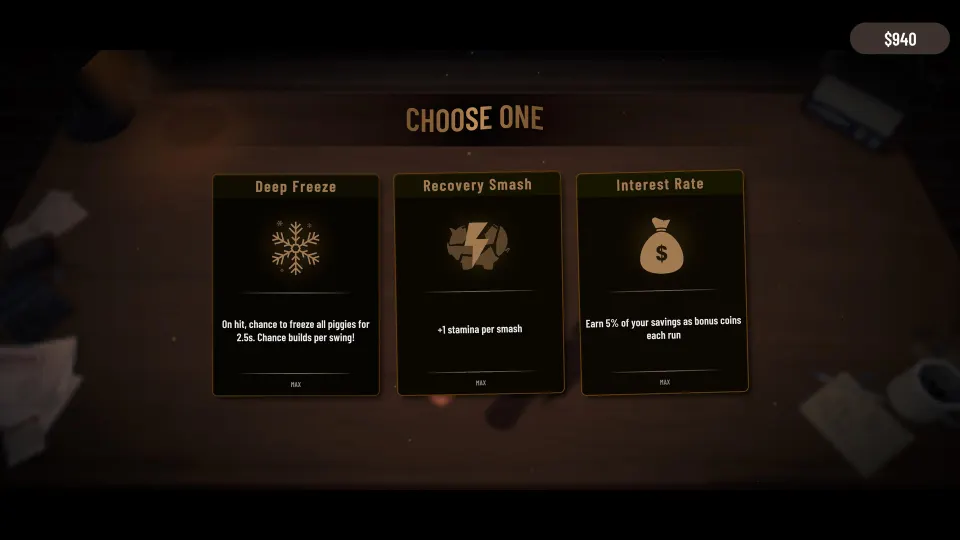
Paying bills keeps the collector away and opens a choice among three perks. There is no single perk that is always correct. Take the option that solves the weakness currently slowing the cycle.
If stamina prevents you from finishing runs, choose endurance or efficiency. If you can already pay bills comfortably, income, loot, crit, or speed bonuses can help the build snowball. A multiplier is strongest when your basic damage and target flow are already stable.
| Current run weakness | Perk priority |
|---|---|
| Stamina repeatedly empties too early | Stamina, efficiency, or recovery |
| Bills are barely affordable | Immediate income or loot |
| Durable piggies slow every run | Damage, crit, or attack improvements |
| Desk is full of weak piggies | Speed, radius, or multi-target effects |
| Build is stable and scaling | Multipliers that improve future earnings |
Bankruptcy is not simply failure. It resets temporary progress, but paid bills generate Legacy Points for permanent jewelry upgrades. A useful rule of thumb is that paid bill value converts at one Legacy Point per $50 paid, so paid bills matter more than leftover wallet cash.
A reset removes current-cycle resources such as cash, the active hammer, gadgets, skill tree progress, and piggy progression. Coins and permanent Rings and Bracelets remain. That makes a controlled bankruptcy far better than endlessly forcing a cycle whose next bill is far beyond recent earnings.
Reset when the math is clearly against you:
- Your recent normal runs cannot approach the income needed before the deadline.
- You would need risky gambling or a loan just to preserve the cycle.
- One more reachable bill can still be paid safely, increasing Legacy Points.
- Permanent damage, stamina, starting-piggy, or loot upgrades would solve the issue next cycle.
Spend Legacy Points on the weakness that ended the previous cycle. Early permanent damage and starting power usually create the clearest improvement, while stamina and loot become more valuable as your run structure develops.
A Practical Route to the Debt-Free Ending
Your first cycle does not need to become the winning cycle. Its purpose is to understand the systems, pay several bills, complete easier early tasks, and earn a useful base of Legacy Points.
Finish accuracy-focused achievements before heavily increasing attack speed. A slow starting hammer is easier to place precisely, while faster swings make accidental misses more likely. Once those goals are done, prioritize profitable runs rather than restarting for perfect accuracy.
A flexible three-cycle plan works well, though more cycles are completely normal.
| Phase | Main goal | What to prioritize |
|---|---|---|
| Cycle 1 | Establish permanent progress | Accuracy tasks, basic bills, damage, first Legacy Points |
| Cycle 2 | Handle awkward achievements | Strong Start, Multismasher, Piggy Shuffle, manageable loan tasks |
| Cycle 3 | Reach the main ending | Piggy unlocks, Shop purchases, coins, King Piggy, Taxes |
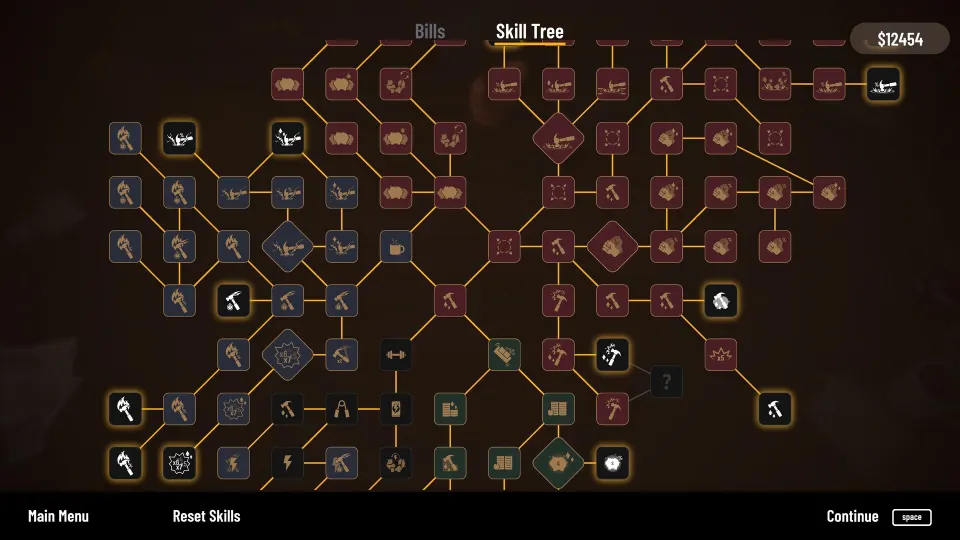
| Post-ending play | Finish temporary completion goals | Remaining Skill Tree branches and Maxed Out |
| Final reset | Buy permanent leftovers | Remaining Rings, Bracelets, and Prestige Jewelry |
Risky achievements are usually easier before attack speed becomes extreme. For Strong Start, wait until two weak piggies are close enough for one opening swing. For Multismasher, target three weaker piggies rather than hoping high-health targets die together. Treat Piggy Shuffle as a one-time opportunity and never gamble the cash reserved for an upcoming bill.
Loans can help close an immediate, safe payment gap, but they are not free money. Take a small Big Toni loan only when you have a practical repayment plan. Carrying a daily cut into late-game earnings can weaken an otherwise strong cycle.
After paying Taxes, choose to keep playing rather than declaring bankruptcy immediately. Your late-game setup is the best time to finish expensive Skill Tree branches, Shop purchases, and collection work. Resetting too soon removes the powerful current build that makes those goals affordable.
FAQ
What is the most important rule in this bills must be paid guide?
Protect the next bill before buying optional upgrades. Your bill reserve is not spare cash, and missing a payment can trigger the collector’s cut from your earnings.
Should I pay a bill as soon as I can afford it?
Not always. If the deadline is still distant, you may be able to improve the build first. However, stop spending once the remaining time makes the payment unsafe.
When should I declare bankruptcy?
Declare it when the next bill is realistically out of reach and further spending will not fix the cycle. Try to pay one final reachable bill first, then use the resulting Legacy Points for permanent upgrades.
Do I need to finish the game in three cycles?
No. Three cycles can be efficient, but random outcomes, bill timing, and missed achievement attempts can make additional cycles reasonable. Progress matters more than cycle count.
Should I reset after the Taxes ending?
No. Keep playing first and finish temporary objectives such as the remaining Skill Tree branches. Bankruptcy removes that current-cycle progress, so complete Maxed Out and other expensive goals before the final reset.