How Long Bills Must Be Paid Takes
Most players can reach the ending of Bills Must Be Paid in about four to five hours. That estimate matters because the game’s escalating bills and bankruptcy cycles can make it feel like a much longer incremental game than it is.
A straightforward run through the main progression averages roughly four hours. Players who stop to complete achievements, buy late-game upgrades, and fully explore post-boss progression should expect closer to four and a half hours, though a relaxed completion can stretch toward six hours or more.
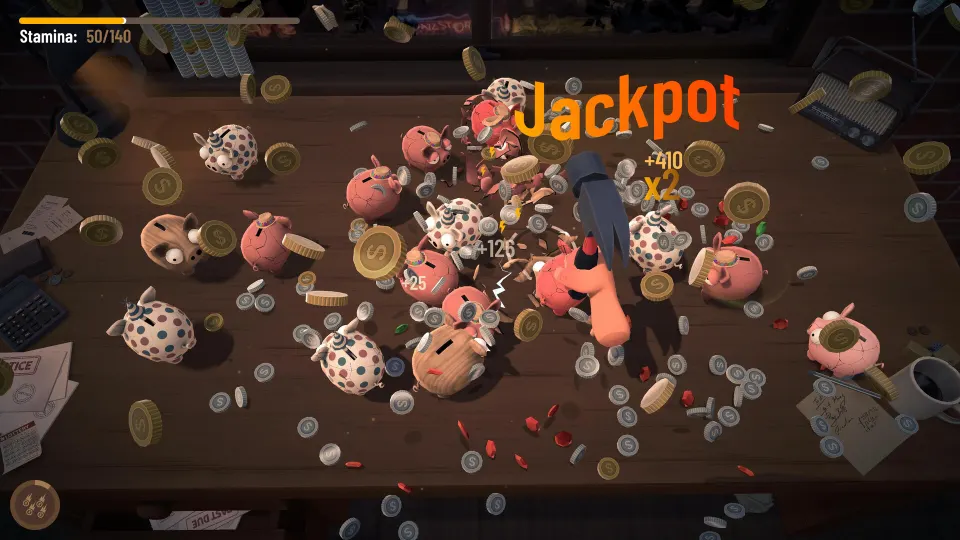
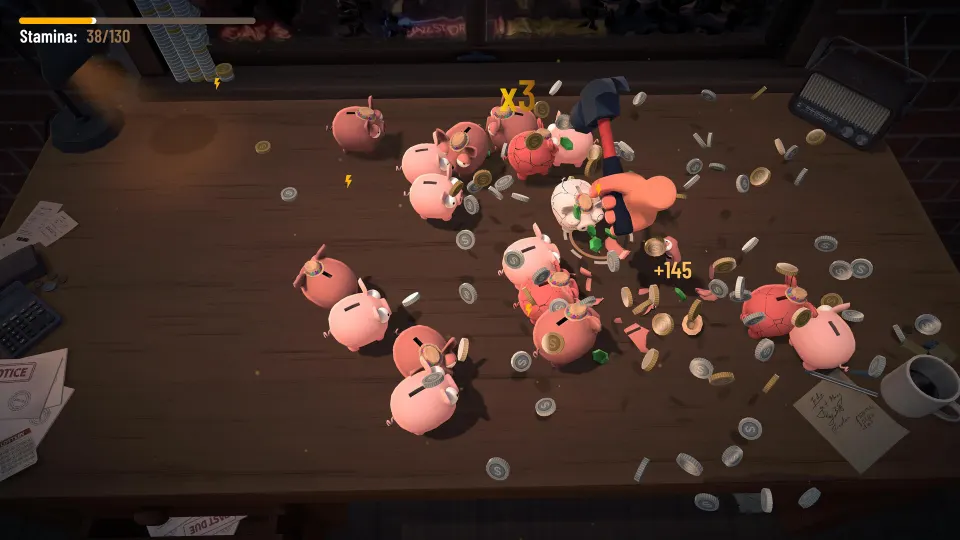
The game is an active incremental strategy game, not a hands-off idle game. You guide an automatically swinging hammer to break piggy banks, collect money, buy upgrades, and meet increasingly expensive payment deadlines. The ending arrives after enough cycles of earning, upgrading, paying bills, and building permanent prestige bonuses.
| Playstyle | Typical time | What it includes |
|---|---|---|
| Main story | About 4 hours | Reaching the core ending and defeating King Piggy |
| Main story plus extras | About 4 hours 30 minutes | More upgrades, optional systems, and progression exploration |
| Completionist | About 4 hours 30 minutes | Most achievements and late-game progression goals |
| Slow or relaxed completion | 6+ hours | Careful play, repeated cycles, gambling, and full achievement cleanup |
These figures are useful targets, not hard limits. A player who understands the prestige system can finish much faster, while someone learning the upgrade tree or pursuing every achievement may need several more cycles.
What Determines Your Ending Time
Your total time is shaped less by reflexes than by how efficiently you protect money for bills while investing enough to keep earning. Each round creates a tension between immediate upgrades and the next required payment.
The game’s core loop is simple: smash piggy banks, collect their money, improve your build, and pay bills before their due date. The complications come from tougher piggies, limited stamina, target spawn rates, and new mechanics that unlock as you progress.
| Situation during a run | Likely problem | Upgrade priority |
|---|---|---|
| The desk is empty before stamina runs out | Too few targets | Starting Piggies, spawn rate, or new-piggy effects |
| Piggies survive several hits | Damage is too low | Base damage, crits, collateral damage, or better hammers |
| Piggies remain when stamina ends | Not enough endurance | Stamina or stamina-restoration effects |
| You kill consistently but earn too little | Weak economy | Loot, luck, jackpot, or coin-multiplier upgrades |
| You cannot safely pay the next bill | Spending is too aggressive | Save cash and buy only upgrades with immediate value |
The quickest route is usually not buying every cheap upgrade. It is identifying the current bottleneck and spending only enough to remove it. If targets are scarce, extra damage will not solve the problem. If targets are durable, more spawn rate may only leave more unbroken piggies on the desk.
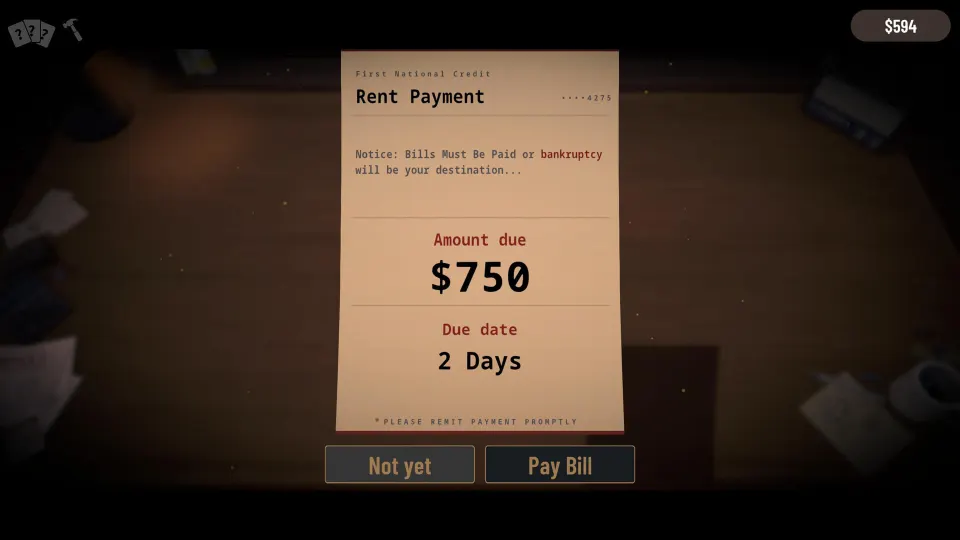
Paying bills early can unlock benefits and new choices, but it also speeds up the next deadline. Early payments are best when your build is already producing reliable money. If you are barely reaching each payment, use the available days to strengthen your build instead of rushing ahead.
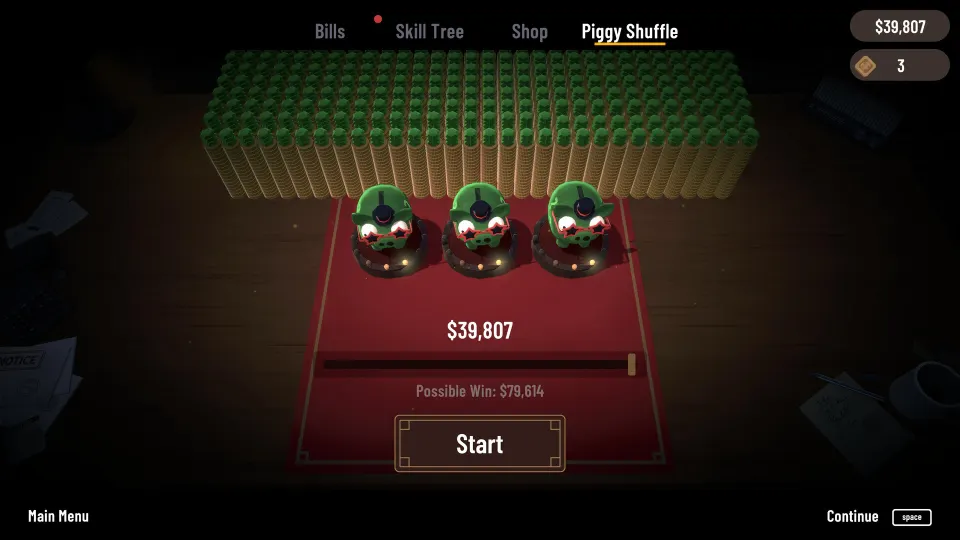
Gambling options and loans can save a weak run, but neither is required to finish. They add risk, especially when your remaining cash is already needed for a bill. A steady upgrade plan is generally more reliable than depending on a double-or-nothing result.
How Bankruptcy and Prestige Affect the Route
Bankruptcy is a normal part of Bills Must Be Paid, not an automatic failed playthrough. When a cycle can no longer meet its next payment, the game converts the value of bills you have already paid into Legacy Points for permanent upgrades.
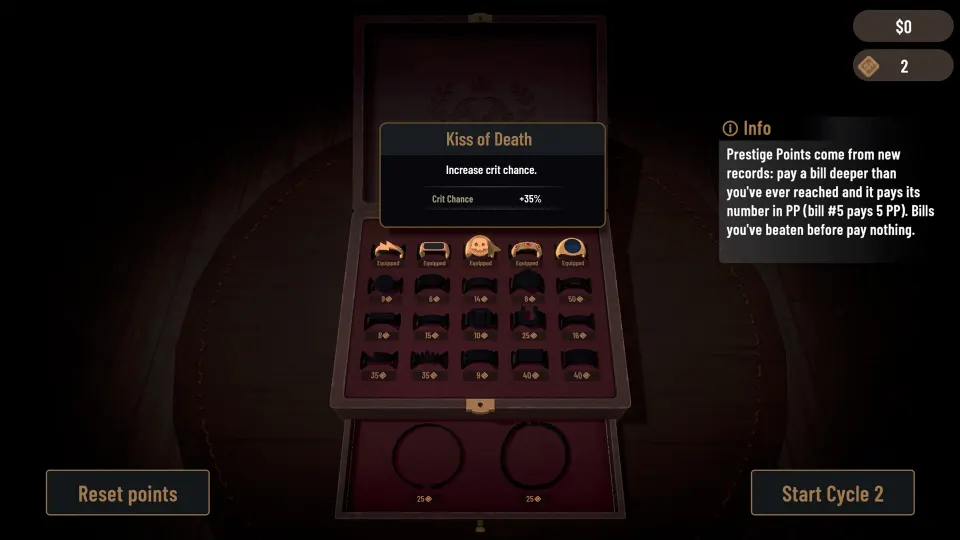
Legacy Points buy lasting bonuses such as Rings and Bracelets. These bonuses carry into future cycles, making later runs substantially easier. Paid bills are what matter for this conversion; unspent wallet cash does not provide the same long-term value.
| Progression element | Temporary or permanent | Why it matters |
|---|---|---|
| Cash and standard skill-tree purchases | Temporary | Strengthens the current cycle but disappears after bankruptcy |
| Paid bills | Converts at reset | Builds the value used for Legacy Point rewards |
| Legacy Points | Permanent currency | Funds prestige upgrades between cycles |
| Rings and Bracelets | Permanent | Improve damage, loot, crits, and other future-run bonuses |
| Hammers and unlocked systems | Progression unlocks | Expand your options as the game advances |
A useful rule is to protect the exact amount needed for your next bill before treating the rest as upgrade money. That “real upgrade budget” prevents the common mistake of buying a strong item and immediately losing the cycle because the deadline arrives.
When a run is clearly falling behind, do not endlessly try to force it. If possible, save enough to pay one more reachable bill, then reset deliberately. This turns a difficult cycle into permanent progress rather than wasting time on purchases that will disappear.
Players commonly finish the game over several prestige cycles. Four to six cycles is a reasonable expectation for a first playthrough, although experienced players can complete the route with fewer resets by making sharper upgrade decisions and using permanent bonuses efficiently.

Reaching the True Ending and Post-Game Goals
The apparent ending occurs when you defeat King Piggy and handle the final tax-related progression. However, the game does not have to end immediately after that boss sequence.
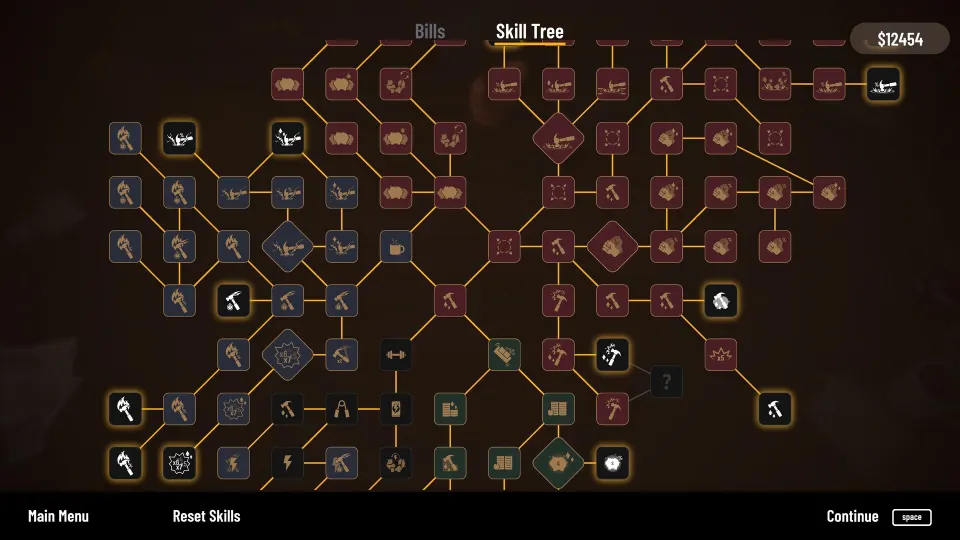
Choose the option to keep playing if you want to finish expensive late-game Skill Tree branches or clean up achievements. Resetting as soon as the boss is defeated can end a productive cycle before you have used its momentum to buy upgrades that are difficult to afford earlier.
For a clean and efficient final stretch, follow this order:
- Defeat King Piggy and complete the required final payment sequence.
- Choose to keep playing instead of immediately ending the cycle.
- Spend your powerful late-game income on expensive Skill Tree nodes.
- Work toward achievements such as “Maxed Out” before your final bankruptcy.
- Reset only after your remaining temporary cash can no longer meaningfully improve permanent progress.
The true ending is therefore both a story milestone and a progression decision. Reaching King Piggy means you have beaten the main game. Completing the late-game tree, post-game jewelry, and achievement goals is optional, but it is what turns a quick ending run into a fuller completion.
Accuracy achievements are easiest early, when the starting hammer is slower and easier to control. Later attack-speed upgrades make it harder to avoid misses, even though they greatly improve income. Getting those precision goals out of the way early can prevent a frustrating cleanup phase after you are already powerful.
The late game can move quickly because permanent upgrades stack heavily. Once damage, loot, spawn rate, and prestige bonuses align, the challenge often shifts from survival to deciding how much completion work you want before declaring a final bankruptcy.
FAQ
Bills Must Be Paid how long to beat for the main ending?
Expect around four hours for the main ending. A first-time player may take longer while learning bill timing, upgrades, and bankruptcy progression.
How long does a completionist run take?
Most completion-focused players finish in roughly four and a half hours, but six or more hours is possible if you take a relaxed approach or need extra prestige cycles for achievements.
Do I need to complete every achievement to see the ending?
No. Defeating King Piggy and finishing the main final progression is enough to beat the game. Achievements, expensive late-game nodes, and prestige jewelry are optional completion goals.
Is bankruptcy a game over?
It ends the current cycle, but it is also how you earn permanent progress. Paid bills convert into Legacy Points, which purchase upgrades that make future cycles easier.
Should I reset right after King Piggy?
Usually, no. Select “Keep Playing” first if you still need expensive Skill Tree nodes or late-game achievements. Reset when the current cycle has delivered all the useful temporary progress it can.