Read the Desk Before Buying
The best upgrade order changes because the problem in front of you changes. A strong Bills Must Be Paid build keeps piggies available, breaks them quickly, lasts through the run, and earns enough to protect the next bill.
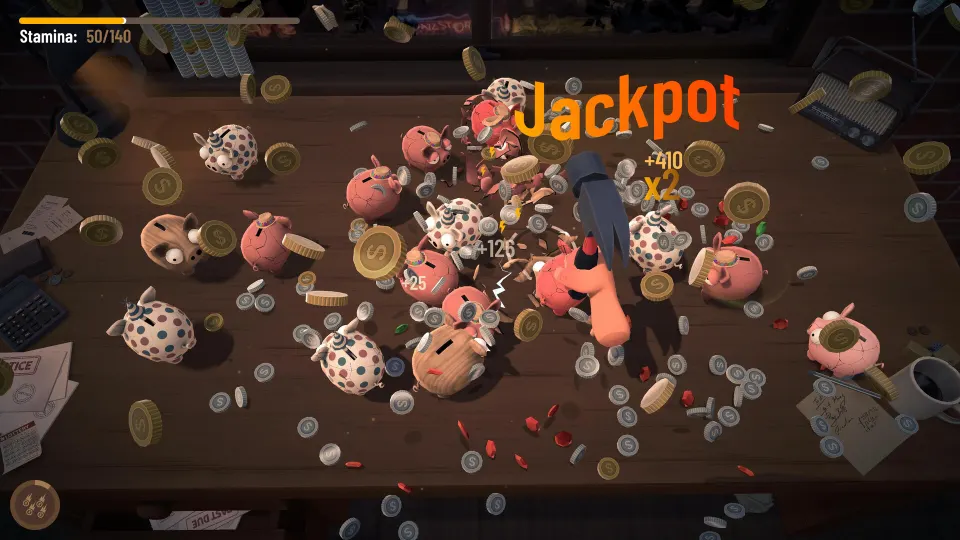
Do not choose upgrades only because their percentage looks large. Instead, look at what is being wasted during an ordinary run. Remaining stamina with no piggies is a target problem. A crowded desk full of unbroken piggies is a damage problem. Piggies left alive when your hand gets tired points to stamina.
| What you see during a run | Main bottleneck | Best upgrade direction |
|---|---|---|
| The desk empties while stamina remains | Too few targets | Starting Piggies, spawn effects, or piggy creation |
| Piggies survive many direct hits | Insufficient damage | Base Damage, critical stats, collateral, or a better hammer |
| The run ends with killable piggies still present | Too little usable stamina | Max Stamina, stamina efficiency, or restoration |
| Clears are reliable but bills outpace income | Low value per clear | Loot, Luck, glowing chance, and income multipliers |
| One tough piggy consumes most of the run | A damage breakpoint is missing | Base Damage, crit damage, or a hammer replacement |
Check this pattern across at least two normal runs. A jackpot can make a weak setup look successful, while one unlucky run can make a sound build look worse than it is.
Your goal is a stable loop: there is usually another piggy to hit, current piggies die in a reasonable number of swings, stamina lasts long enough to use the desk, and the resulting cash keeps the next bill covered.
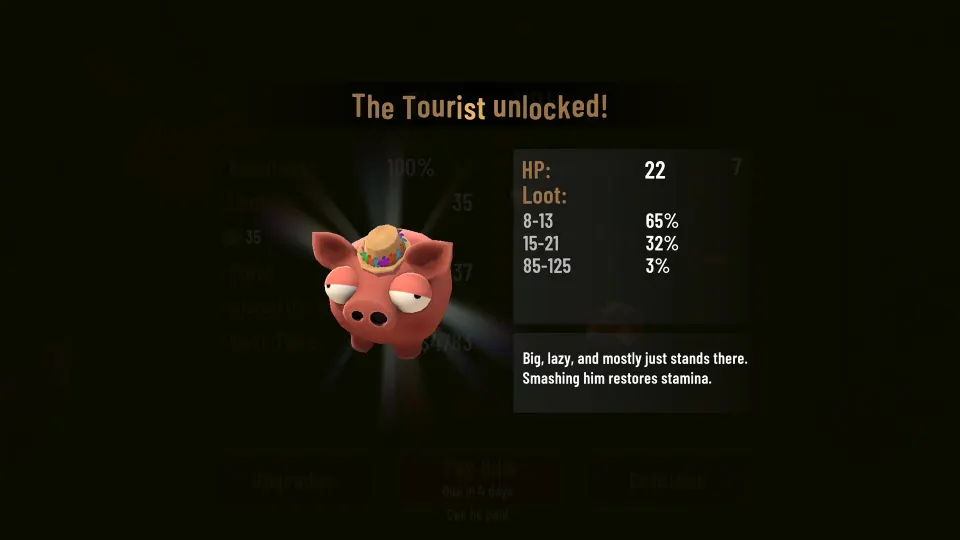
A Safe Early Upgrade Order
A practical opening order establishes basic killing power before chasing multipliers. You should adjust it whenever the desk shows a different problem, but this sequence works as a starting framework.
- Buy enough Base Damage to avoid spending most of a run on the opening piggies.
- Take one useful stamina improvement if killable targets remain when runs end.
- Add Starting Piggies only when you begin waiting for targets.
- Choose Hit Radius, Collateral Damage, or another multi-target effect once multiple piggies can stay on the desk.
- Reach the next meaningful damage breakpoint.
- Add Attack Speed after targets die quickly and the desk stays populated.
- Move into Loot and Luck when clears are already consistent.
| Early priority | Why it comes first | Delay it when |
|---|---|---|
| Base Damage | Turns slow multi-hit kills into efficient kills | Current piggies already die quickly |
| Stamina | Lets you finish available, killable targets | The desk is regularly empty first |
| Starting Piggies | Prevents idle time at the start of a run | The desk is already crowded |
| Radius or collateral | Improves value when targets overlap | There are too few piggies to hit together |
| Attack Speed | Produces more completed kills in a stable build | Swings outpace targets or drain stamina too fast |
| Loot and Luck | Raises income after the combat loop works | A new piggy tier is still an HP wall |
Attack Speed is especially easy to overvalue. Faster swings are useful only if they connect with targets you can destroy. If four piggies are on the desk and all die rapidly, speed may help. If the desk is empty after those four die, another speed node mostly creates waiting time.
If you are pursuing accuracy achievements, consider completing them before heavily increasing Hammer speed. A slower starting Hammer gives you more control and makes it easier to avoid useless swings.
Balance Damage, Spawn, and Stamina
Damage, target availability, and stamina support one another. Buying too much of one can leave the others wasted. More spawn does not help if every piggy takes the whole run to break. More damage does not help much if no targets are present. More stamina is inefficient when the desk has already emptied.
Use the end of each run as a quick test. Ask what prevented the next dollar from reaching your wallet.
| End-of-run result | What it means | Next purchase to consider |
|---|---|---|
| Stamina remains, desk is empty | You ran out of targets | Starting Piggies or spawn rate |
| Stamina is gone, weak piggies remain | Your run is too short | Stamina capacity or recovery |
| Stamina is gone, one durable piggy remains | Damage is too low | Base Damage, crits, or a hammer |
| Desk stays full and piggies die quickly | Your damage loop is stable | Attack Speed, radius, or on-hit effects |
| Desk clears but cash growth is weak | Each kill is not valuable enough | Loot, Luck, Midas Touch, or glowing effects |
When a new piggy type suddenly takes many hits, return to direct damage. Critical Chance, Critical Damage, first-hit bonuses, and stronger hammers can all create the breakpoint that turns a stalled run into a profitable one.
Multi-target upgrades become better as the desk gets denser. Radius, collateral damage, chain effects, lightning, shockwaves, and similar effects have limited value when only one piggy is available. Once several targets survive together, they can turn one swing into several kills or soften nearby piggies for later hits.
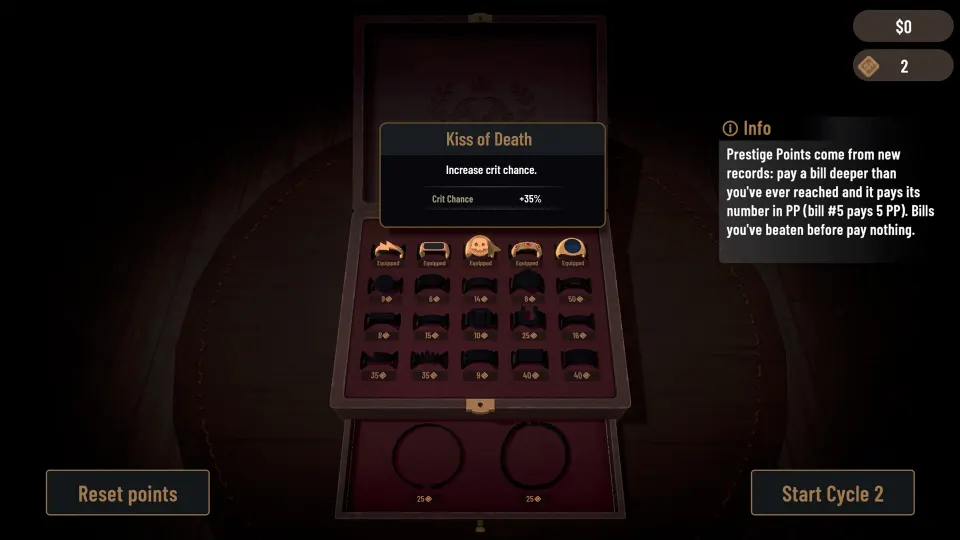
Spend Cash Without Missing the Next Bill
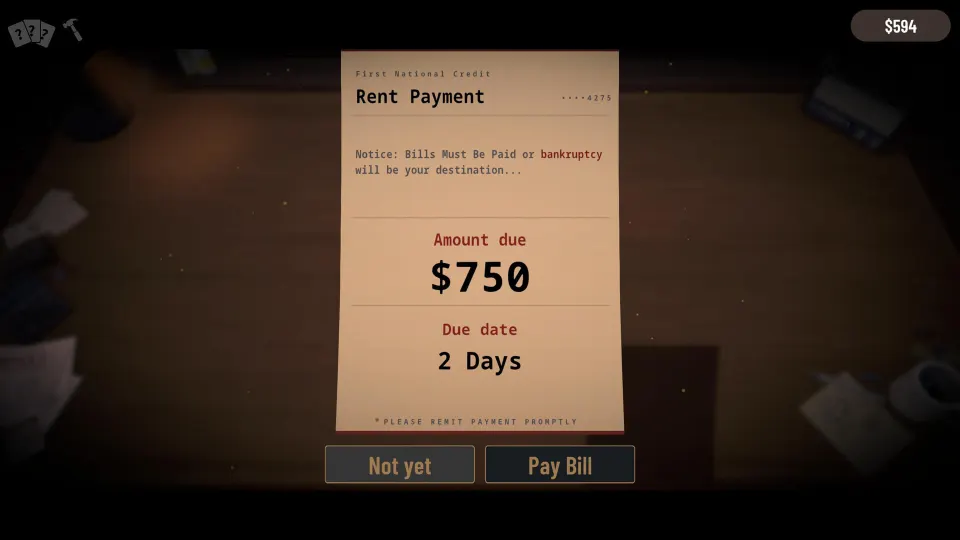
Temporary upgrades are not worth a failed deadline unless they immediately solve the problem that is stopping your income. Treat the next bill as money you already spent.
Your real upgrade budget is:
| Budget item | How to use it |
|---|---|
| Total cash | Everything currently in your wallet |
| Protected bill reserve | The exact amount needed for the upcoming bill |
| Real upgrade budget | Total cash minus the protected bill reserve |
| Emergency purchase | A purchase that can quickly change kills, income, or survival before the deadline |
For example, if you have $320 and the next bill is $200, you only have $120 available for ordinary upgrades. Spending the full $320 on a speculative node can erase the momentum you built by forcing bankruptcy before the next payment.
A hammer is also a package of trade-offs, not an automatic upgrade. Compare its damage, attack speed, hit radius, and critical properties against the problem you actually have.
Buy a new hammer when:
- A newly unlocked piggy tier has become a clear HP wall.
- Cheap skill nodes no longer reach the next kill threshold.
- Its stats solve the current problem better than several smaller purchases.
- You can still reserve enough money for the next bill.
Delay a hammer when your desk is empty, your current tool already clears efficiently, or the purchase would make the bill unsafe. The same restraint applies to expensive late-game income nodes. Loot and Luck multiply a functioning build; they do not fix a build that cannot kill piggies consistently.
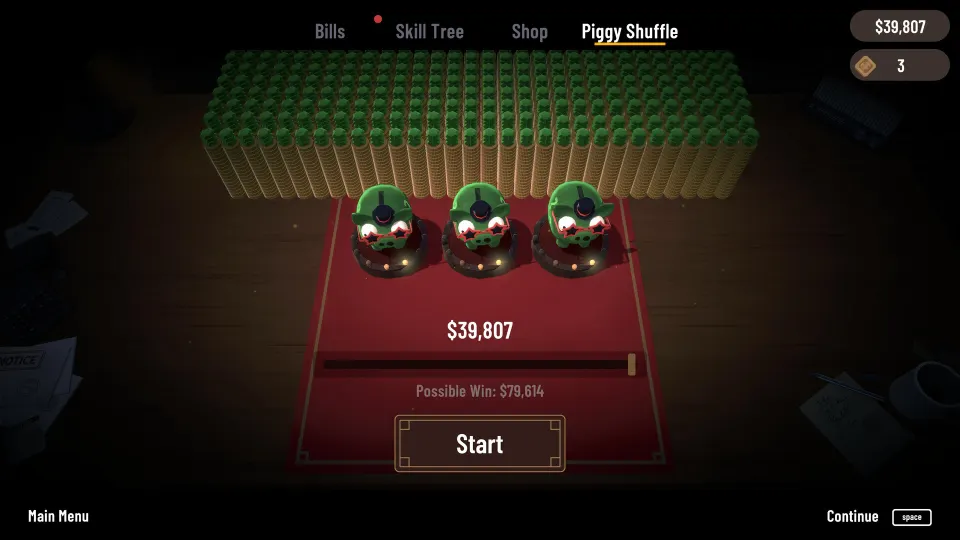
Late investments such as Super Jackpot are best treated as long-term farming tools. Do not let a costly chance-based purchase threaten a bill payment or an immediate damage breakpoint.
FAQ
What is the best Bills Must Be Paid upgrade order?
There is no permanent best order. Start with enough damage to kill efficiently, add stamina when killable piggies remain at the end of runs, and add Starting Piggies or spawn when the desk empties first. Take speed, area effects, and loot after the core loop is stable.
Should I buy Attack Speed early?
Usually not as a first priority. Attack Speed is valuable when piggies die quickly, targets stay available, and your stamina can support additional swings. If piggies are tough or the desk is empty, damage or spawn upgrades are more useful.
When should I prioritize Loot and Luck?
Choose Loot and Luck after you can reliably clear available piggies. These upgrades improve income from successful kills, but they will not solve a damage wall or an empty desk.
When should I replace my Hammer?
Replace it when the new hammer creates a meaningful damage, critical, speed, or radius breakpoint and you can still pay the next bill. Keep your current hammer if target availability or stamina is the real limiter.
Should I reset immediately after reaching the ending?
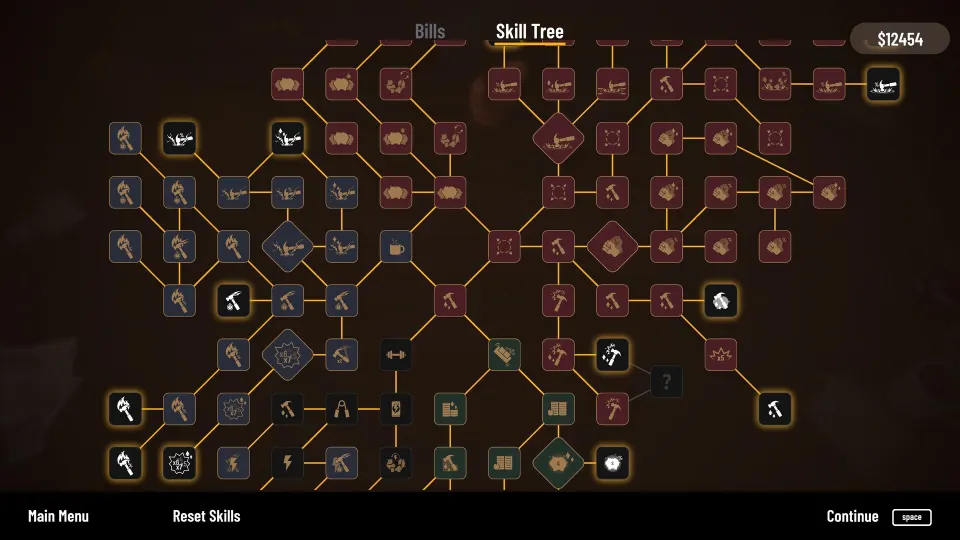
No. If you want maximum Skill Tree progress, choose to keep playing after the late-game sequence and inspect newly available branches. Finish expensive current-cycle upgrades before a final bankruptcy, since temporary cash, Hammer, and Skill Tree progress are lost on reset.