How to Use This Tier List
The best perk is the one that gets your next bill paid without starving your build of upgrades. In Bills Must Be Paid, a flashy bonus can be worthless if your run ends early, the desk is empty, or piggies take too many hits to break.
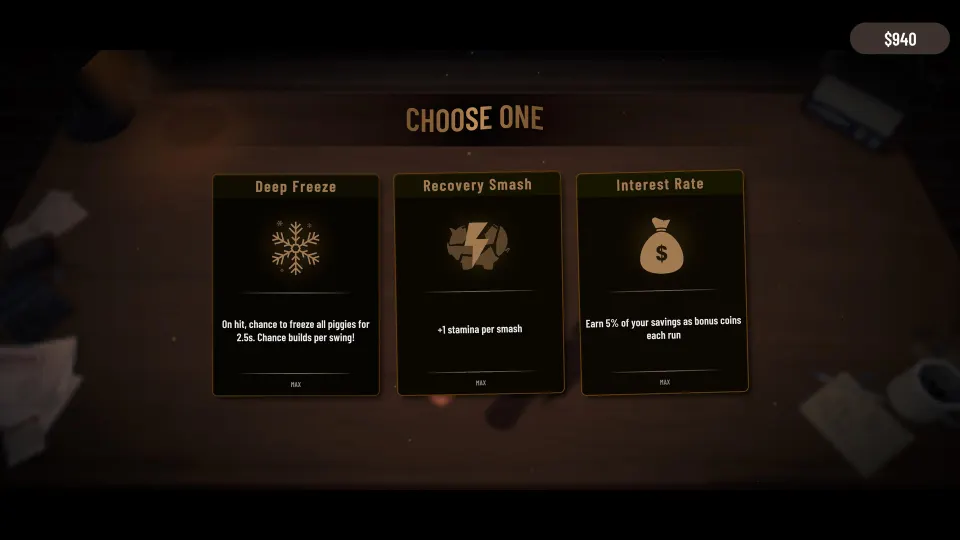
This bills must be paid tier list ranks perk categories by their practical effect on the next payment cycle. Perks appear after you pay a bill, usually as three choices, so use the ranking as a decision framework rather than a fixed shopping list.
| Tier | Perk category | Best when | Main risk |
|---|---|---|---|
| S | Income and loot value | Your bill reserve is too small | Less urgent after income is secure |
| S | Stamina efficiency | Targets remain when runs end | Wasted if the desk empties first |
| A | Damage | Piggies survive too many swings | Does not solve low target count |
| A | Luck | You destroy many piggies each run | Weak with few loot opportunities |
| B | Survival and recovery | A cycle is under immediate pressure | Usually grows slower than economy |
| C | Delayed scaling | Your next bill is already safe | Can leave you short before it matters |
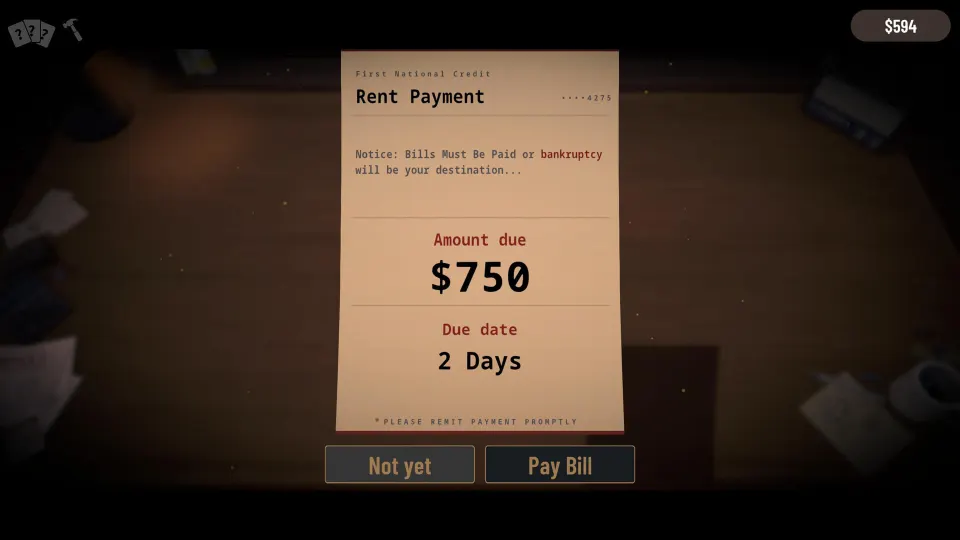
Treat bill money as protected. Before buying a permanent-looking upgrade or gambling on a risky mechanic, set aside the amount needed for the next payment. A strong build only matters if it can survive long enough to use its gains.

S-Tier Perks: Income and Stamina
Income perks are the safest early choice because they directly improve the resource used for bills, hammers, and skill-tree nodes. They are especially valuable when normal runs repeatedly fall just short of the next payment.
Stamina perks are equally powerful when your hand tires out while breakable piggies are still on the desk. More productive swings mean more kills, more drops, and more chances to convert a decent build into a successful payment.
| Problem after a normal run | Best S-tier response | Why it works |
|---|---|---|
| You miss the next bill despite clearing targets | Income, loot value, or higher-value drops | Raises money earned from successful kills |
| Your stamina ends with piggies still available | Max stamina, reduced drain, or restoration | Converts remaining targets into extra income |
| You have enough cash but no upgrade room | Protect the bill reserve, then take income | Prevents an upgrade purchase from causing a deadline failure |
| Runs feel productive but payouts are inconsistent | Income first, luck later | Reliable value is better than rare high rolls early |
Choose stamina before income when stamina is clearly the limiting factor. If ten additional swings would destroy several available piggies, stamina creates both immediate and future value. Choose income first when you already clear the desk but still cannot build a safe reserve.
Do not confuse attack speed with stamina. Faster swings help only when targets are available, current piggies die quickly enough, and your stamina pool can support the extra attacks. Otherwise, speed can burn through a run without producing more destroyed piggies.
A-Tier Perks: Damage and Luck
Damage rises in value whenever a new piggy tier creates a health wall. If a durable piggy absorbs most of your stamina, more income or faster attacks will not fix the underlying issue. You need fewer hits per kill.
Luck is a scaling choice. It becomes excellent after your hammer, damage, and target supply let you destroy many piggies in one run. Before then, a larger chance for rare drops has too few chances to pay off.
| Desk condition | Priority upgrade or perk | Avoid for now |
|---|---|---|
| Several piggies survive repeated direct hits | Base damage, crit damage, hammer upgrade | More spawn rate |
| One high-health piggy blocks the desk | Damage breakpoint or stronger hammer | Minor speed upgrades |
| The desk remains full and kills are quick | Attack speed, collateral, multi-hit | More basic damage |
| The desk is clear but bills still outgrow income | Loot, luck, glowing drops, Midas effects | Small combat-only nodes |
| Piggies overlap regularly | Hit radius or collateral damage | Narrow single-target bonuses |
A hammer upgrade is usually worth prioritizing when it crosses a clear damage breakpoint against current piggies. Better weapons can be more efficient than several small nodes, but never spend the money reserved for a due bill just to reach one early.
Choose luck after your build already clears reliably. Rare coins, boosted drops, and jackpot-related effects gain value from volume. A player breaking two piggies per run should stabilize damage or stamina; a player breaking dozens can make luck a major source of growth.
Build Around the Current Bottleneck
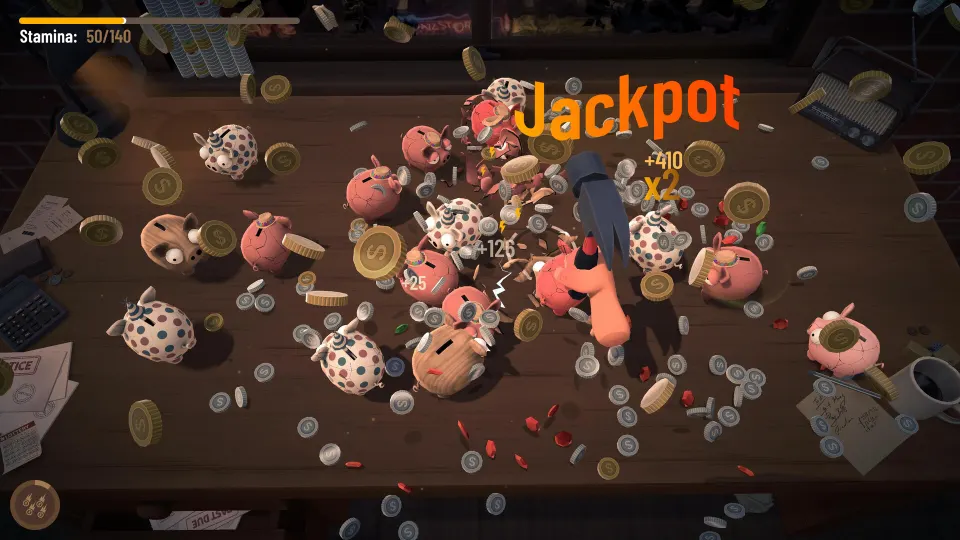
Read the desk after an ordinary run, not after an unusually lucky jackpot. One big payout can disguise a build that is still failing in normal conditions.
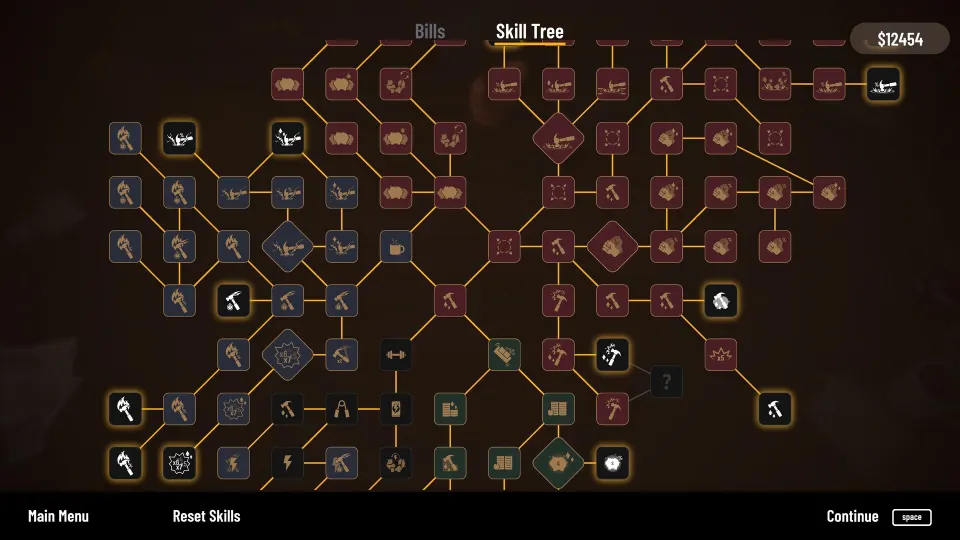
Use this quick sequence whenever you receive perk choices or consider a skill-tree purchase:
- Check the next bill, deadline, and protected reserve.
- Identify what was wasted: stamina, available targets, damage, or earning potential.
- Pick the option that improves that failure point in the next run.
- Reassess after one or two normal runs before making a large purchase.
- Shift into scaling only when the upcoming payment is comfortably covered.
| What you see | What it means | Best response |
|---|---|---|
| Empty desk with stamina left | You need more targets | Starting piggies, spawn rate, chaining effects |
| Full desk with high-health piggies | Your damage is too low | Base damage, crit, hammer breakpoint |
| Killable piggies left when stamina ends | Endurance is limiting progress | Stamina, drain reduction, recovery |
| Desk clears but money stays low | Each kill is not valuable enough | Loot, luck, higher-value piggy progression |
| Faster hammer causes missed or empty swings | Speed exceeds your current setup | Pause speed purchases and fix supply or damage |
Starting piggies and spawn rate are not universally strong. They are great when the hammer waits for targets, but poor when the desk is already crowded with piggies you cannot break. Likewise, extra damage is wasted when everything already dies quickly and the desk cannot refill.
Early bill payments can provide useful bonuses, but they are not automatically optimal. Paying too early may cut off days that could have funded better upgrades and leave you immediately saving for an even larger bill. Pay early only when the reward meaningfully improves your next cycle and your build remains funded.
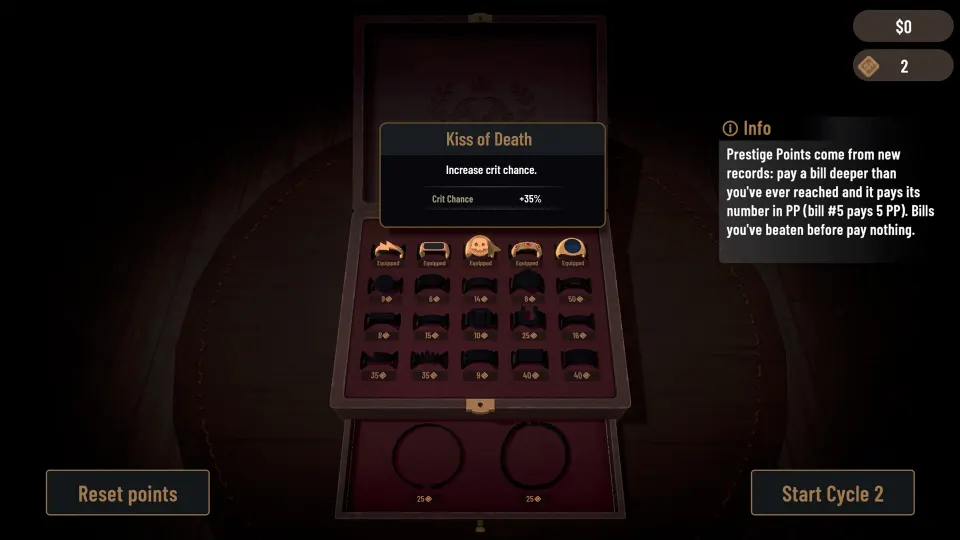
Bankruptcy is also part of progression, not necessarily a failed save. Paid bills generate Legacy Points for permanent rings and bracelets, while most current-run power resets. If the next payment is far beyond repeated normal payouts, aim to pay one more realistically reachable bill, then reset into permanent strength rather than dragging out a doomed cycle.
FAQ
What is the best choice in the bills must be paid tier list?
Income and stamina perks are the best general choices because they solve the most common early problems: failing to earn enough and ending runs before available piggies are destroyed. Pick damage instead when piggies take too many swings, and luck after you consistently clear large groups.
Should I choose attack speed early?
Usually not as a first priority. Attack speed is valuable only when piggies are available, they die quickly, and your stamina supports extra swings. Early on, damage, stamina, or starting piggies often create more actual kills.
When should I buy luck perks?
Buy luck once you destroy enough piggies each run for additional rare-drop chances to matter. If your runs contain only a few kills, guaranteed improvements to damage, stamina, or income are more dependable.
Is paying bills early always good?
No. Early payment bonuses can be useful, but paying immediately can deny you time to earn money and purchase upgrades. Keep the payment safe, then decide whether the early bonus outweighs the lost farming time.
When should I declare bankruptcy?
Reset when several ordinary runs show that the next bill is no longer realistic and further spending will not change that. Try to pay another reachable bill first when safe, then use the earned Legacy Points on permanent upgrades that address the bottleneck from the previous cycle.