Upgrade by the Problem on Your Desk
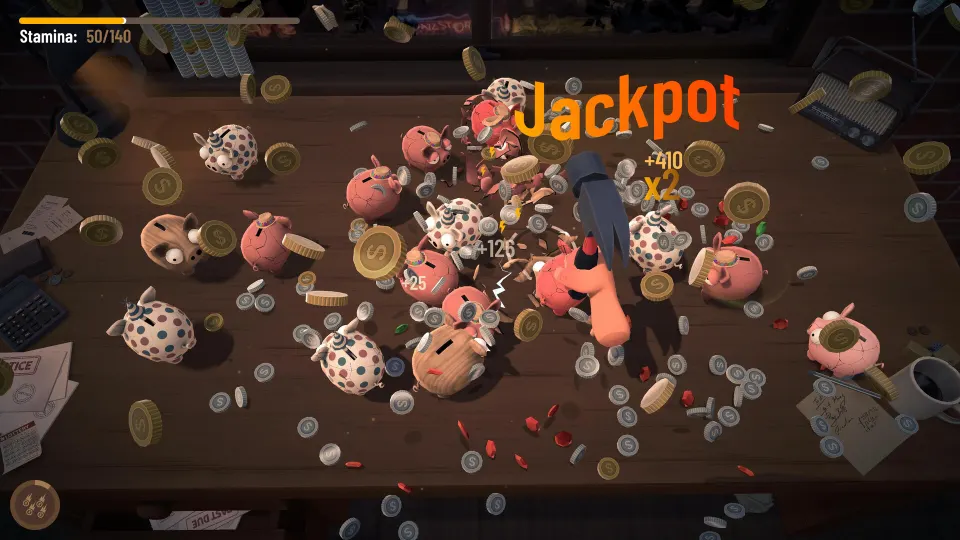
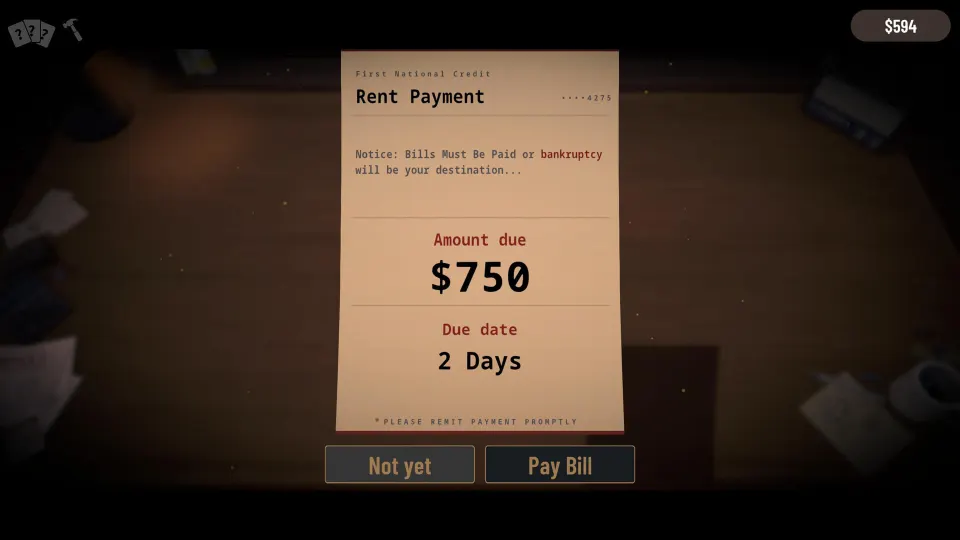
The best upgrade is the one that turns a weak run into a bill-paying run. In Bills Must Be Paid, a fast hammer or expensive skill means little if it does not address the resource currently limiting your income. Watch the desk, stamina bar, and bill timer before spending.
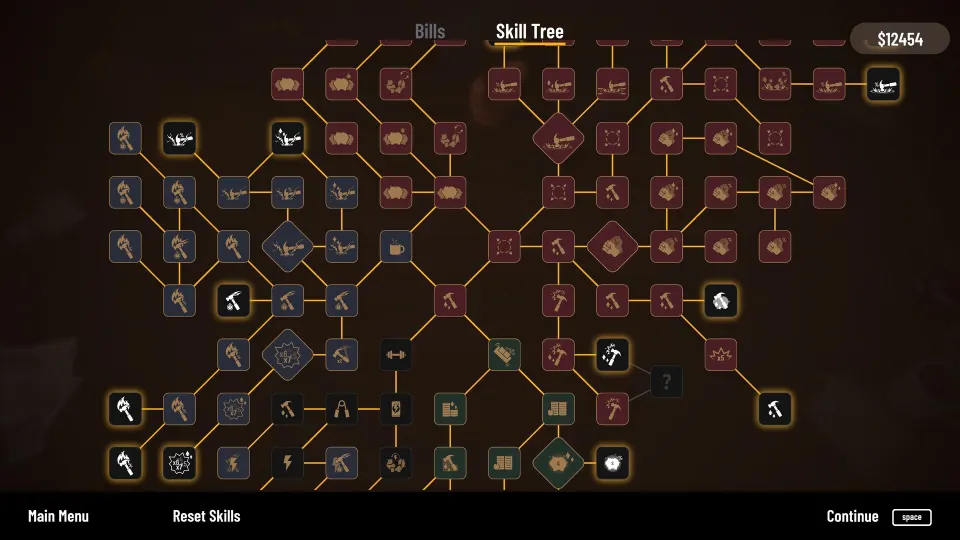
This is a branching progression system, so there is no permanent “buy these nodes first” route. Damage, target availability, stamina, loot, critical effects, and hammer traits all become valuable at different moments. The practical goal is to keep piggy banks available, destroy them efficiently, and preserve enough cash for the next bill.
| What happens during a normal run | Your likely bottleneck | Best upgrade direction |
|---|---|---|
| The desk empties while stamina remains | Too few targets | Starting Piggies, spawn rate, target-creation effects |
| Piggy banks fill the desk but survive too long | Insufficient damage | Base Damage, critical stats, damage-focused hammer |
| The run ends with killable piggies still present | Not enough usable time | Maximum stamina, stamina efficiency, restoration |
| You clear the desk but income misses the next bill | Low reward value | Loot, Luck, glowing-piggy effects, value multipliers |
| One tough piggy absorbs most of the run | A damage breakpoint is missing | Hammer replacement, damage, crit damage |
| You can pay bills comfortably but progress slows | Scaling is behind | Income multipliers and late-game upgrades |
Judge the pattern over several ordinary runs. A lucky loot drop, jackpot, or unusually favorable desk can make an unbalanced build look stronger than it is.
A useful early objective is simple: each active run should have targets to hit, enough power to break them, enough stamina to use the available targets, and income that keeps the next payment safe.
A Reliable Early and Midgame Upgrade Route
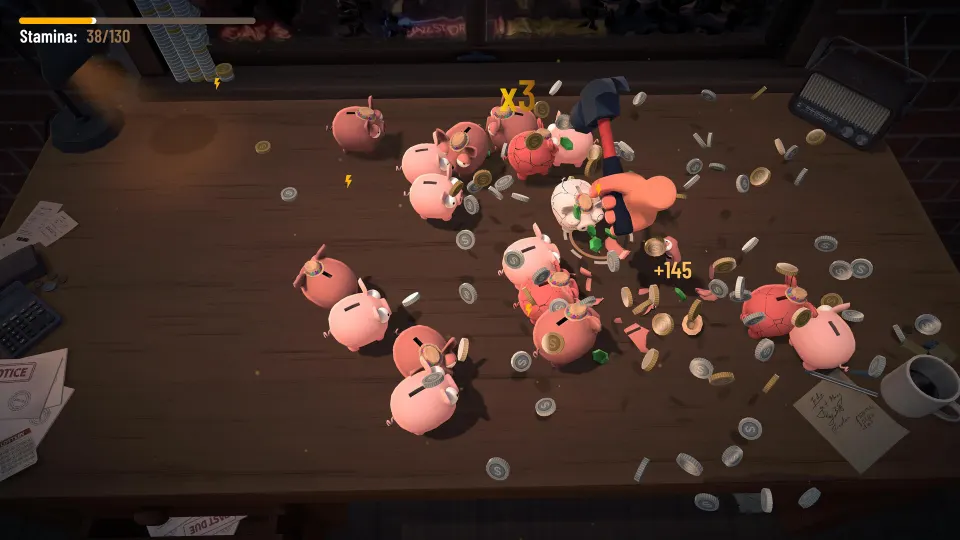
Begin with enough direct damage to stop opening piggies from taking most of a run. Once they die in a reasonable number of hits, add only the next upgrade that fixes a visible issue.
A flexible opening order looks like this:
- Buy Base Damage until early targets stop feeling durable.
- Take one stamina improvement if runs end with easy targets still alive.
- Add Starting Piggies or spawn rate only if the desk regularly becomes empty.
- Invest in radius, collateral effects, or attack speed after multiple targets stay available.
- Shift toward Loot and Luck once kills are already reliable.
- Reassess when a new piggy tier creates a noticeable health wall.
| Upgrade type | Buy it when | Delay it when |
|---|---|---|
| Base Damage | Current piggies need too many hits | Targets already die quickly |
| Attack Speed | The desk stays populated and stamina supports extra swings | You wait for targets or weak hits cannot finish piggies |
| Starting Piggies / Spawn Rate | Stamina remains after the desk is cleared | The desk is already crowded |
| Stamina | Runs end with killable targets remaining | A single piggy still takes nearly a whole run |
| Radius / Collateral Damage | Several piggies can be reached together | Targets are sparse or too durable |
| Loot / Luck | Your build clears consistently but cash growth lags | Combat basics are still failing |
Attack Speed is one of the easiest upgrades to overvalue. Faster swings create more opportunities only when there are live targets and enough damage behind each hit. If you are already waiting for spawns, speed turns into downtime. If targets are durable, faster weak hits can burn stamina without increasing completed kills.
Use a normal run as a quick diagnosis. If you end with stamina but no piggies, buy target availability. If you end with piggies but no stamina, buy stamina only if those piggies are realistically breakable. If one target dominates the entire run, solve damage first.
Hammers, Income Scaling, and Bill Reserves
Hammers are trade-offs, not automatic upgrades. Different choices can emphasize damage, attack speed, radius, or critical chance. Replace your current hammer when its new strengths directly solve the problem in front of you, rather than because the shop offers a newer model.
| Hammer situation | Recommended response | Why |
|---|---|---|
| A new piggy tier becomes a health wall | Favor damage or critical-focused traits | Reaching a kill breakpoint matters more than extra swings |
| Many weak piggies occupy the desk | Consider radius, speed, or collateral effects | More targets can benefit from each action |
| Valuable individual targets need focused hits | Consider crit and direct-damage traits | Precision damage improves priority kills |
| Your current hammer clears comfortably | Keep it and spend on skills instead | A replacement may not increase income enough to repay itself |
| The purchase endangers the next bill | Wait | A stronger hammer is not worth collector pressure |
Before any major skill or hammer purchase, separate bill money from upgrade money. If you have $900 and the approaching bill costs $700, your meaningful upgrade budget is $200, not $900.
This habit prevents a common collapse: buying a power spike, then missing a bill and losing a share of future earnings to the collector. Keep spending aggressive when the deadline is distant and conservative as it approaches.
Once your build clears reliably, income upgrades become more attractive than small combat gains. Loot, Luck, glowing-piggy rewards, and similar effects improve money earned per successful kill. They are poor fixes for an HP wall, but excellent scaling tools after the combat loop is stable.
Late-game purchases such as Super Jackpot are farming investments, not emergency progression tools. Their cost and chance-based payoff make them better when bills are already secure and cheaper upgrades no longer create important breakpoints.
Progression, Bankruptcy, and Maxing the Tree
Bankruptcy is part of long-term progression, not simply a failed save. A reset removes much of the current-cycle power, but paid bills convert into legacy progress that can purchase permanent benefits such as rings and bracelets. Those permanent boosts make later cycles start stronger.
Do not force a weak cycle to survive indefinitely. If required bill income has moved far beyond what your current build can earn, a planned reset can be more productive than spending every run gambling on a rescue.
Prioritize permanent bonuses that improve the beginning of every future cycle:
- Damage helps early piggies die faster.
- Starting Piggies reduce empty-desk downtime.
- Stamina extends productive runs.
- Loot improves the value of successful clears.
For full skill-tree completion, avoid resetting immediately after reaching the main ending. Continue playing when possible and inspect the tree again after late progression milestones; additional King Piggy-related branches may become available later than the visible early tree. Finish expensive current-cycle upgrades before a final bankruptcy, because most normal skill-tree progress does not carry over.
Exact costs and balance can change with patches. The official patch notes have already adjusted late-node prices, so use in-game values as the final authority when planning a purchase.
FAQ
What is the best first upgrade in this bills must be paid upgrade guide?
Usually, choose Base Damage if starting piggies take too long to destroy. Choose stamina if easy targets remain when the run ends, or Starting Piggies if the desk becomes empty before stamina does.
Should I buy Attack Speed early?
Not automatically. Buy it after piggies die reliably and the desk remains populated. Otherwise, damage, spawn, or stamina will usually produce more completed kills.
When should I replace my hammer?
Replace it when the new hammer addresses a clear bottleneck, such as a new piggy health wall or a crowded desk that needs more radius. Keep enough money reserved for the next bill before purchasing.
When should I invest in Loot and Luck?
Invest after your build can consistently clear available targets. Loot and Luck improve income from successful kills, but they do not solve low damage, empty desks, or exhausted stamina.
Should I reset as soon as I reach bankruptcy?
A reset is worthwhile when the current bill requirements clearly outpace your build and the legacy progress will improve the next cycle. Do not reset before finishing important current-cycle skill-tree goals you still need.